Posts

How to Teach Art History to K-8 Students | All About Art
Image
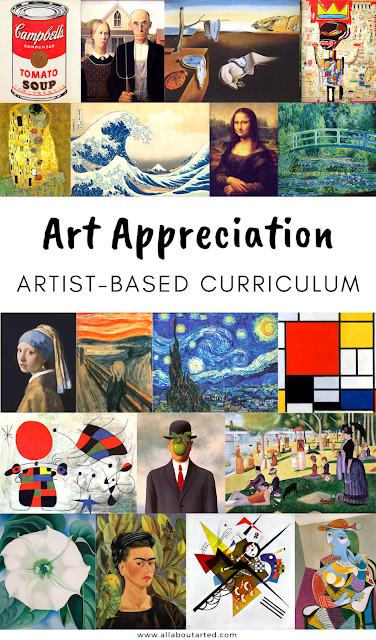
How I Teach Art History to My K-8 Students I love teaching my students about famous artists. They get so excited to meet a new artist every month, and it makes me so happy when they remember an artist they studied months, or even years, earlier. A kindergartener spotting a Van Gogh on a calendar and shouting the name across the room never gets old. Over the years I have settled into a simple, repeatable system for teaching art history to K-8 students: one artist a month, one short lesson, and a note-taking routine that grows with the grade. Here is exactly how I run it. Start with the skills, then pick the artists I build my K-8 art curriculum by first mapping out what art concepts and skills each grade should be practicing that year. Only then do I choose which artists, past and present, will demonstrate those age-appropriate ideas. From there, every class from kindergarten through 8th grade gets a different "Artist of the Month." I set aside one "Art Appreciation"...

Cubism Drawings

Image
  After studying artist Pablo Picasso, 6th grade students had their hand at creating their own Cubism drawings. Students chose their own subject matter and practiced different ink shading techniques to transform their drawings into the Cubism style. We learned about iconic artist Pablo Picasso using this PowerPoint and Art Lesson . The PowerPoint reviews all his styles, from his early works and Blue Period to Cubism and his later works. Cubism is a fascinating style of art that revolutionized 20th century art. In Cubist artwork, objects are analyzed, broken up and reassembled in an abstracted form. Instead of depicting objects from a single viewpoint, the artist shows the subject from several viewpoints at the same time for a more authentic representation of the subject. This is a complex style of art to wrap your head around. More advanced high school students may be able to grasp how to actually draw an object from different perspectives like Pablo Picasso and Georges Braque...

Autumn Still Life

Image
4th grade students were so excited to walk into art class and find that each table was set with a still life of gourds and mini pumpkins!  What a fun fall surprise art project!  After having studied Paul C é zanne and his iconic still life paintings, students used oil pastels to recreate the colors and shading in these lovely Autumn vegetables. Here in New England, decorative gourds like these are ubiquitous in fall!  Their fun shapes and colors make them so charming.  We recently viewed this PowerPoint to learn about Paul C é zanne and his quintessential still life paintings of apples and fruit.  The pumpkins and gourds were the perfect way to put a seasonal spin on this art history lesson. For this activity, I brought in all the gourds and pumpkins from home (I go a little overboard with my fall decorating!).  However, you could also ask your class or community to donate the gourds.  Even if only half your students brought one in, it would still be ...

Art with Nature

Image
 Ah, fall in New England... These first couple of months in the school year are the perfect opportunity to get students outside to create some art in nature. Students love putting together these open-ended sculptures inspired by Andy Goldsworthy, bursting with the beautiful colors and textures of nature! We start by learning about environmental artist Andy Goldsworthy... we look through books and the Scholastic Art issue about his art, and if we have time we watch clips from his Rivers and Tides documentary.  We study how he uses color, value, shape, and texture to create his stunning abstract sculptural works. We head outside with nothing but our imagination (ok, and maybe some scissors and twine). I let my students choose whether they wanted to work independently or in small groups of 2-3 people.  We are lucky that our school campus has a good variety of leaves, sticks, flowers, rocks, and mulch to work with. Our class got so many benefits from this project.  We ...

Modern Art Self Portraits

Image
   After studying different styles from the Modern Art era, 8th grade students each chose one style to inspire their own self-portrait. The results are a deeper understanding of Modern Art styles, and an exhibit of unique portraits that reflect each student’s personal art preferences. Step 1: Understanding Modern Art We start this lesson by reviewing some of the major artists and art styles of the Modern Art era.   The term Modern Art describes art created during the late 1800s and early-mid 1900s that defied convention and tradition and took art to a new level of creative expression.  It was a period of experimentation, as artists went beyond the boundaries of realistic art (the camera became commonplace by the end of the 1800s and could now meet that need for realistic representation). Modern art is not to be confused with Contemporary Art, which is art created from the late 20th century up through the present day. The Modern Art movements that we focus on for...